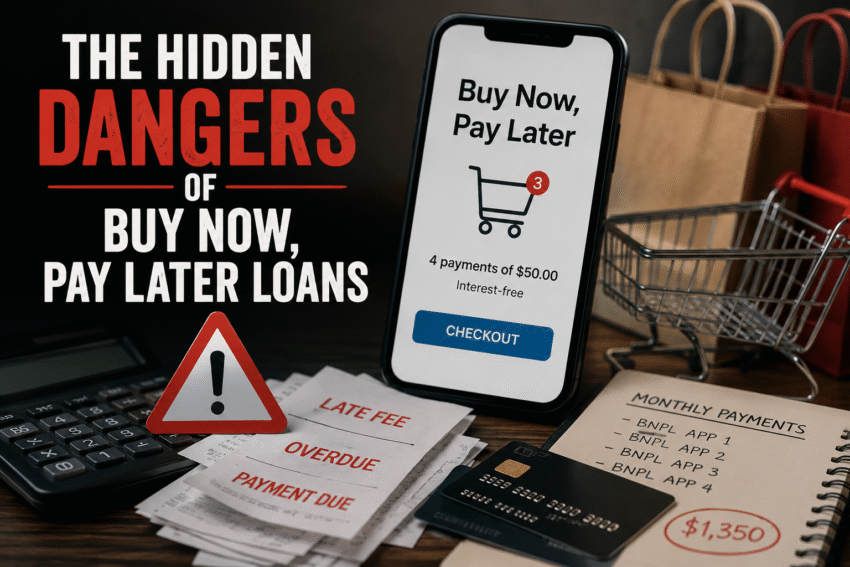
Buy Now, Pay Later (BNPL) services have exploded in popularity over the last few years. Companies promise shoppers the ability to split purchases into smaller payments with little or no interest, making everything from clothing and electronics to groceries feel more affordable.
At first glance, it sounds harmless — even helpful.
But behind the convenience lies a growing financial problem that many consumers don’t fully understand until it’s too late. Buy Now, Pay Later loans can quietly create debt cycles, damage financial stability, and encourage overspending in ways traditional credit cards never could.
What Is Buy Now, Pay Later?
Buy Now, Pay Later programs allow consumers to purchase items immediately and pay for them over time through installment payments. Popular providers advertise fast approvals, low payments, and minimal credit checks.
The process is designed to feel simple:
- Pick an item online or in-store
- Choose BNPL at checkout
- Make a small upfront payment
- Pay the rest over several weeks or months
Because the payments seem small, many shoppers don’t realize how quickly these loans can pile up.
The Illusion of Affordability
One of the biggest dangers of BNPL loans is that they create the illusion that expensive purchases are affordable.
A $400 purchase suddenly becomes “just four payments of $100.” That psychological shift encourages consumers to buy things they may not have purchased otherwise.
Instead of asking:
“Can I afford this?”
People begin asking:
“Can I afford the payment?”
That mindset often leads to overspending and impulse buying.
Retailers know this. In fact, studies have shown that consumers spend significantly more when Buy Now, Pay Later options are offered at checkout.
Multiple Loans Add Up Fast
Many consumers use several BNPL services at the same time without realizing how much debt they’re accumulating.
Someone may have:
- A payment for shoes due this week
- Furniture payments next week
- Electronics payments later in the month
- Holiday shopping installments still active
Because each payment appears small individually, the total monthly burden can become overwhelming.
Unlike a traditional loan with one clear balance, BNPL debt is often scattered across multiple apps and providers, making it harder to track.
Late Fees and Penalties
Although many BNPL companies advertise “interest-free” financing, late payments can trigger hefty fees.
Missed payments may result in:
- Late charges
- Account restrictions
- Collection activity
- Additional penalties
- Negative credit reporting
Some providers now report missed payments to credit bureaus, which means Buy Now, Pay Later debt can potentially hurt your credit score.
Consumers who believed they were using a harmless payment tool may suddenly find themselves dealing with real financial consequences.
Encouraging Impulse Purchases
Buy Now, Pay Later services are intentionally designed to reduce hesitation during shopping.
The financing option appears directly at checkout, often alongside phrases like:
- “No interest”
- “Easy payments”
- “Only $25 today”
This marketing approach removes the emotional “pain” of paying full price upfront.
As a result, consumers are more likely to make emotional purchases rather than thoughtful financial decisions.
Young Adults Are Especially Vulnerable
Younger consumers are among the heaviest users of BNPL loans.
Many young adults:
- Have limited savings
- Lack financial education
- Carry existing student debt
- Face rising living expenses
Buy Now, Pay Later can appear to be an easy solution for short-term cash flow problems.
Unfortunately, it may teach unhealthy financial habits early in life, including relying on debt for everyday purchases.
BNPL Can Mask Financial Problems
Another hidden danger is that Buy Now, Pay Later loans can hide deeper financial struggles.
Instead of addressing budgeting problems or income shortages, consumers may repeatedly use installment payments to stretch their finances further.
This creates a dangerous cycle:
- Spend beyond current income
- Use BNPL to delay payment
- Fall behind on future obligations
- Use more financing to compensate
Over time, this pattern can spiral into chronic debt and financial stress.
Little Consumer Protection
Compared to traditional credit cards and bank loans, many BNPL services operate with fewer consumer protections.
Depending on the provider:
- Disputes may be difficult to resolve
- Refunds can become complicated
- Terms may be confusing
- Customer support may be limited
Some users discover that returning merchandise does not automatically stop installment payments, creating additional frustration and financial headaches.
Safer Alternatives to Buy Now, Pay Later
If you’re considering a BNPL loan, there are often better options:
- Save up before making non-essential purchases
- Use a written monthly budget
- Build an emergency fund
- Use debit or cash whenever possible
- Limit impulse shopping
- Compare total costs carefully
If financing is truly necessary, traditional credit options with clearer terms and stronger protections may be safer.
Final Thoughts
Buy Now, Pay Later loans are marketed as convenient financial tools, but they can quickly become dangerous traps for consumers who aren’t careful.
The small payment amounts make it easy to overspend, underestimate debt, and lose track of financial obligations. What begins as a simple purchase can evolve into a cycle of missed payments, fees, and mounting financial stress.
Convenience should never replace financial discipline.
Before using Buy Now, Pay Later services, consumers should ask themselves an important question:
“If I can’t afford it today, should I really be buying it at all?”